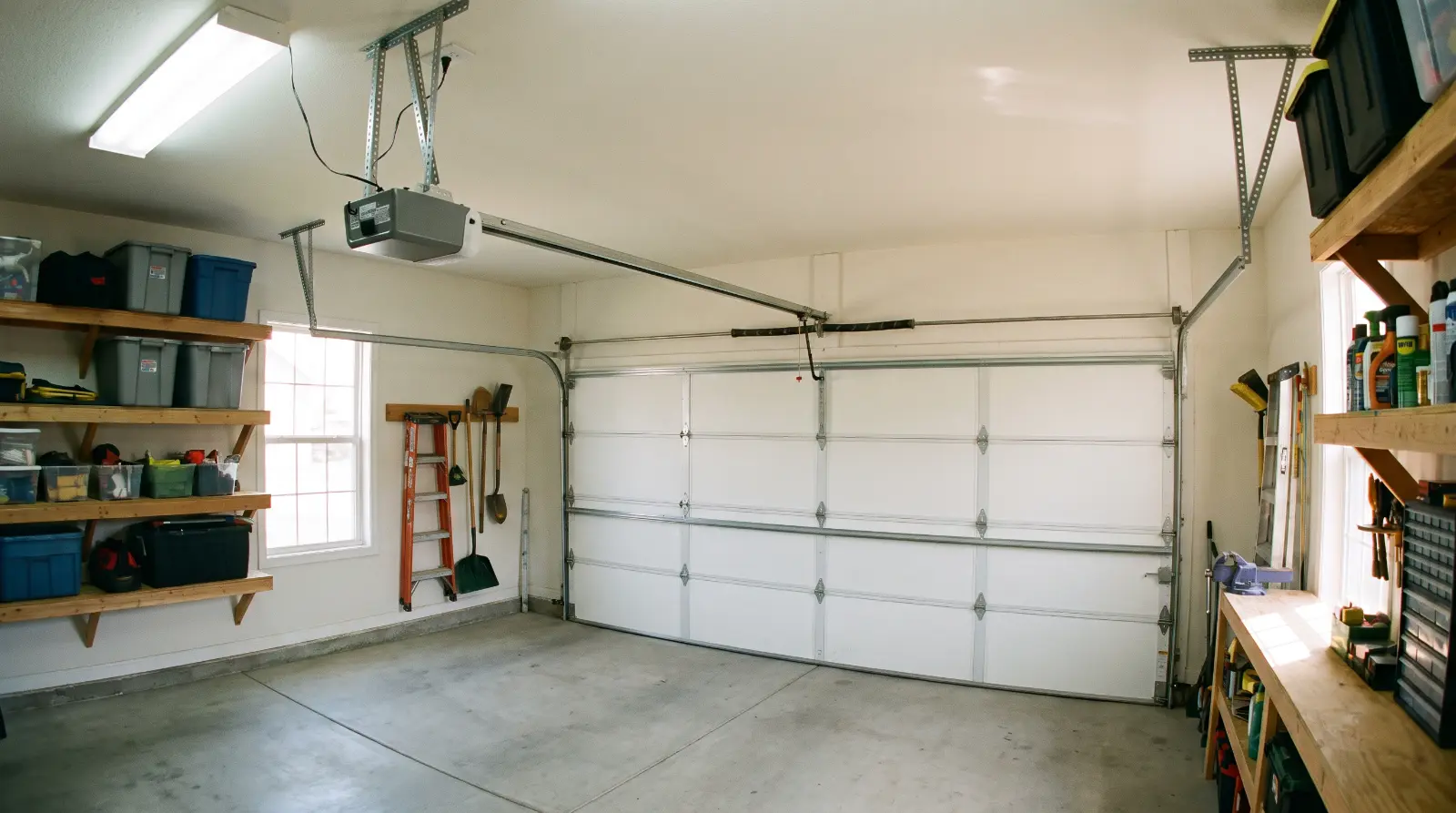
An opener is a motor with a rail and a carriage. It's designed to guide a balanced door, not to lift dead weight. That's why a lot of "opener problems" turn out to be spring, cable or track problems that the opener is struggling against. Before you replace an opener, it's worth knowing which one you're dealing with.
Opener problem or door problem?
Disconnect the opener with the red release cord while the door is fully closed. Then lift the door by hand. If it moves smoothly and stays roughly halfway up when you let go, the door is fine and the problem is in the opener. If it's heavy, jerky, crooked or won't stay put, fix the door first. Running the opener against a bad door just wears out the opener too.
Don't pull the release cord with the door open if you suspect a broken spring. The door can drop fast.
Common opener symptoms and what they usually mean
| What you notice | Likely cause |
|---|---|
| Motor hums, door doesn't move | Stripped drive gear, a capacitor failing, or a broken spring making the door too heavy |
| Door starts down, then reverses | Safety sensors out of line or dirty, or the close force set too low |
| Wall button works, remote doesn't | Remote battery, lost programming, or the lock button turned on |
| Nothing happens at all | No power at the outlet, a tripped GFCI, or a failed circuit board |
| Opener runs but chain or belt slips | Loose chain or belt, or a worn sprocket |
| Door stops short of the floor or the top | Travel limits need adjusting |
| Loud grinding or rattling | Worn gear, loose rail hardware, or a chain hitting the rail |
Things you can safely try
- Swap the remote and keypad batteries
- Test the outlet and reset any GFCI outlet or breaker
- Clean and realign the safety sensors
- Check the lock or vacation button on the wall control
- Re-pair remotes using the learn button and your model's manual
- Reconnect the wifi or app after a router change or outage
If the door reverses or won't close at all, the won't open or close guide walks through the sensor checks step by step.
Leave gear replacements, circuit boards, rail repairs and force adjustments past what the manual describes to a technician. Force settings are part of the safety system, and turning them up to "fix" a sticky door hides a problem that can hurt someone.
Chain, belt and wall-mount openers
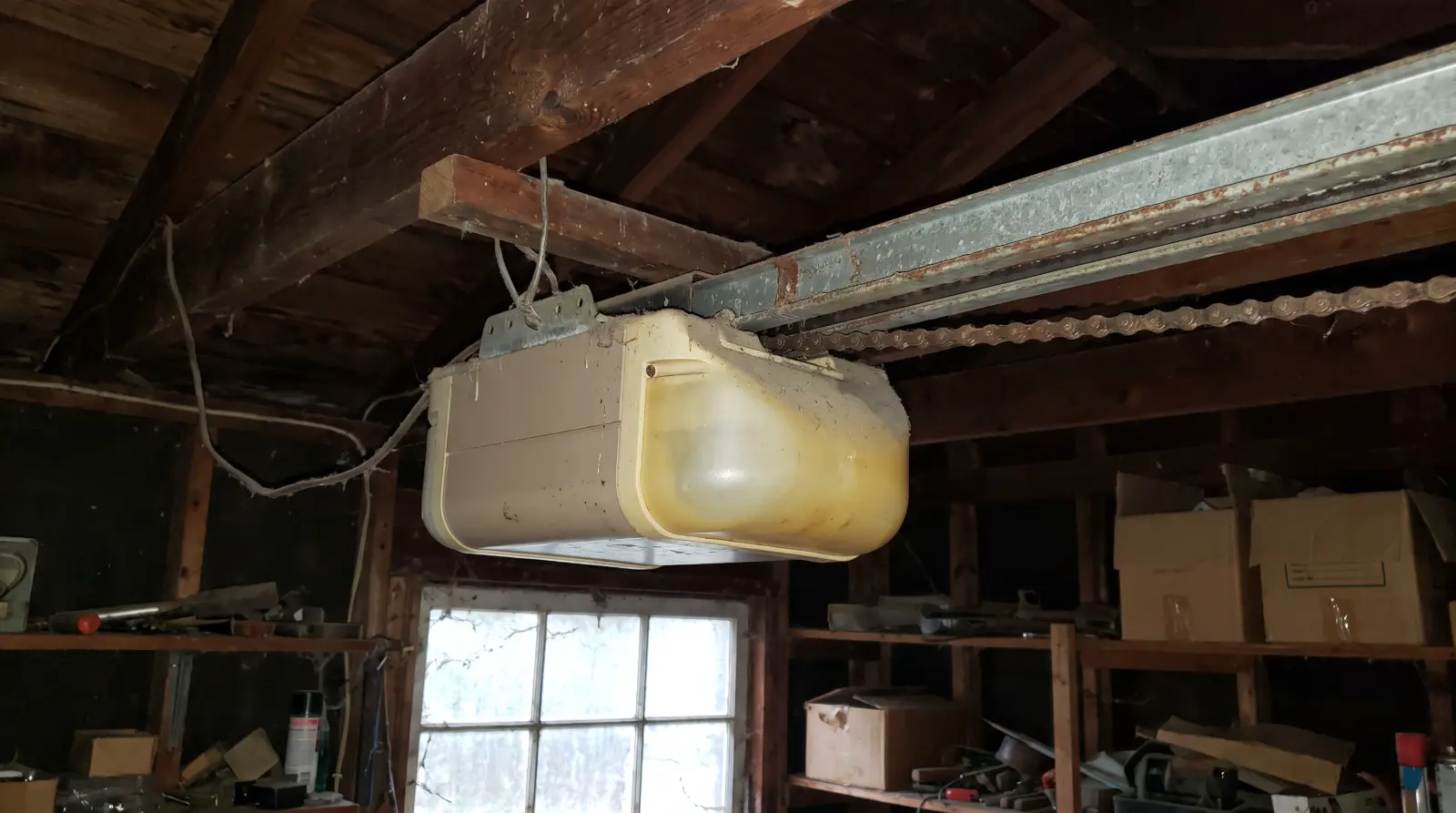
Chain drive openers are the workhorses you'll find in a lot of postwar Independence ranches. They're durable but loud, which matters if there's a bedroom over or beside the garage. Belt drive openers are much quieter and common in newer houses. Screw drive units show up in some older garages. Wall-mount (jackshaft) openers mount beside the door on the spring bar and free up the ceiling, which can help in a low-ceiling garage.
When to replace instead of repair
Consider a new opener when:
- It was made before 1993 and has no safety sensors. Federal safety rules have required entrapment protection, like photo eyes, on residential openers sold since then.
- Parts aren't available for your model anymore
- It's the second major repair in a couple of years
- You want features it doesn't have: battery backup for storm outages, a quieter belt drive, smartphone control, or a rolling-code remote
If you're also thinking about the door itself, read repair or replace a garage door before deciding. Putting a new opener on a door with tired springs isn't a good match.
Opener acting up?We'll try to connect you with an independent garage door company that works your ZIP code.
Call (816) 422-DOORAfter a storm or outage
Spring storms around Independence often bring power flickers. Afterward, it's common for remotes to lose programming, wifi openers to drop off the network, or for someone to pull the release cord to get a car out. If the door feels balanced by hand, re-pair the remotes and reconnect. If storm damage hit the door, start with the hail and storm damage guide.
Opener questions
My remote stopped working after a power outage. What do I do?
Check the remote battery first. If that's fine, the opener may have lost its programming, or the lock button on the wall control may be on. Most openers have a learn button on the motor unit for re-pairing remotes. The opener's manual, or the maker's website, has the steps for your model.
Do new openers need a battery backup?
Many newer openers include or offer one, and some states, such as California, require it on new installs. Given how often spring storms knock out power around Kansas City, it's worth asking about either way.
Is it worth fixing an opener that's 20 years old?
Often not. Parts can be hard to find, and older units lack newer safety and security features. Ask the technician whether replacing the gear or circuit board is sensible, or whether a new opener makes more sense for your door.